No Stream, No Problem: Why Your New Favorite Song Might Only Exist at the Merch Table
Photo: cassette tapes merch table live concert, via media.karousell.com
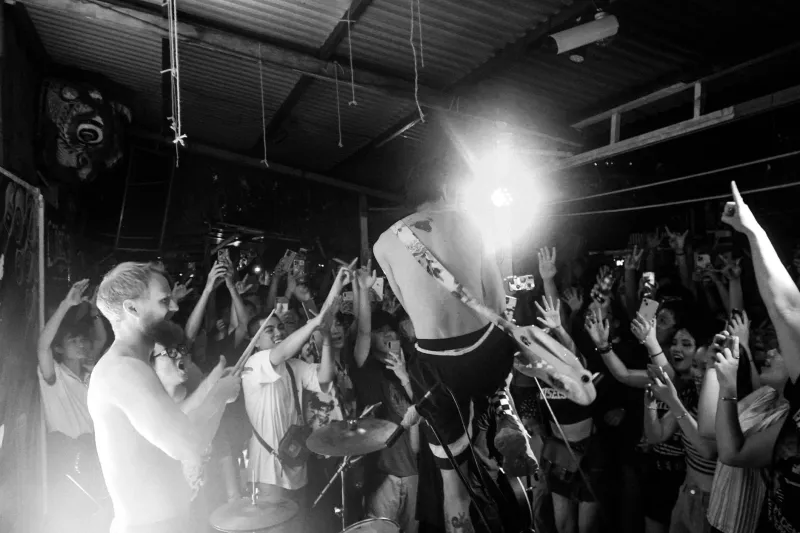
At a warehouse show in Chicago this fall, the best song of the night was not on Spotify. It was on a cassette with a hand-stamped cover, forty copies, twelve dollars, and a handwritten note that said thanks for coming. The band played it last. Then they packed up the table and took the remaining tapes home. If you were not in the room, you could not hear it again. That was the point.
In 2026, show-only releases are having a moment. Artists are pressing short runs of cassettes, loading USBs with unreleased tracks, printing QR codes that expire, and selling one-night downloads at the merch table. Some keep their best material off streaming entirely. Others put out a single for the algorithm and save the real record for the people who show up. It is part scarcity, part economics, and part a quiet refusal of the idea that every song should be available to everyone at all times.
The merch table as release strategy
The formats are not new. Punk and metal bands have been selling tapes at shows for decades. What is new is how deliberate the strategy has become. A band might record six songs, stream two, and press the other four on a cassette that only comes with a ticket. A producer might put a whole beat tape on a USB and sell it for $15 after the set. A singer-songwriter might print a QR code on a poster that links to a download page live for 24 hours. The release is the event, and the event is the release.
For artists, the appeal is control. Streaming platforms reward consistency, playlist placement, and songs that work as background music. A show-only release does not have to compete with that. It can be long, weird, loud, or unfinished. It can be a demo that would never pass a label review. It can be a song that only makes sense in a room with a bad PA and fifty people standing too close to the drums. The merch table becomes a distribution channel for the stuff that does not fit the feed.
The economics are real
A $10 cassette costs maybe $3 to $4 to make. The artist keeps the rest. On streaming, a song might earn a fraction of a cent per play, and the payout arrives months later through a distributor. For a small artist, selling thirty tapes at a show can be more meaningful than a thousand streams. It is not a living, but it is gas money, food money, and proof that someone wanted the thing enough to pay for it.
There is also a marketing logic to it. A show-only release gives fans a reason to come out instead of waiting for the album to hit their queue. It creates a story: I was there, I got the tape, you cannot stream it. That story travels. It makes the live show feel less like a content delivery mechanism and more like a room with a secret.
The anti-algorithm argument
Streaming is built for infinite access. Show-only releases are built for memory. That is the philosophical difference. A playlist can hold ten thousand songs and still feel like nothing. A cassette with a hand-drawn cover feels like an object someone made. It asks the listener to participate. You have to be at the show, bring cash, talk to the person at the table, and take the thing home. The friction is the point.
But friction can also exclude. Not everyone can get to a show. Not everyone can afford merch. Not everyone has a tape deck. A disabled fan, a parent, a person in a rural town, or a teenager without a car may never get the song. If an artist never releases it digitally, the scarcity that feels intimate to one person can feel like a closed door to another. The best versions of this strategy leave a crack open: a later digital release, a pay-what-you-want download, a lyric sheet, or a live recording that goes up after the tour.
The risks of hiding your best work
There is a career risk, too. Playlists are not everything, but they are still how a lot of people find new music. A booking agent, a festival programmer, or a journalist may not be able to hear the song that would make them care. If the only copy is on a tape in a box under the bed, the artist is asking the audience to do a lot of work. That can build loyalty, or it can just build a smaller audience.
The artists who make it work tend to be honest about the trade-off. They do not pretend that scarcity is a business plan for everyone. They use show-only releases as a layer, not a wall. They press enough for the room. They keep a few back for the people who could not make it. They eventually put the music somewhere public. They treat the merch table as a relationship, not a locked vault.
What the secret is for
The show-only release is not really about keeping music away from people. It is about giving the people in the room something that cannot be replicated by an infinite catalog. It says the night mattered. It says the song was made for this crowd, this town, this bad sound system, this moment. In a culture that promises everything on demand, that is a rare thing. It is also a reminder that a scene is not a playlist. It is a room, a door, a table, and a person who decided to show up.