Small on Purpose: The Underground Creators Turning Tiny Audiences Into Full-Time Income
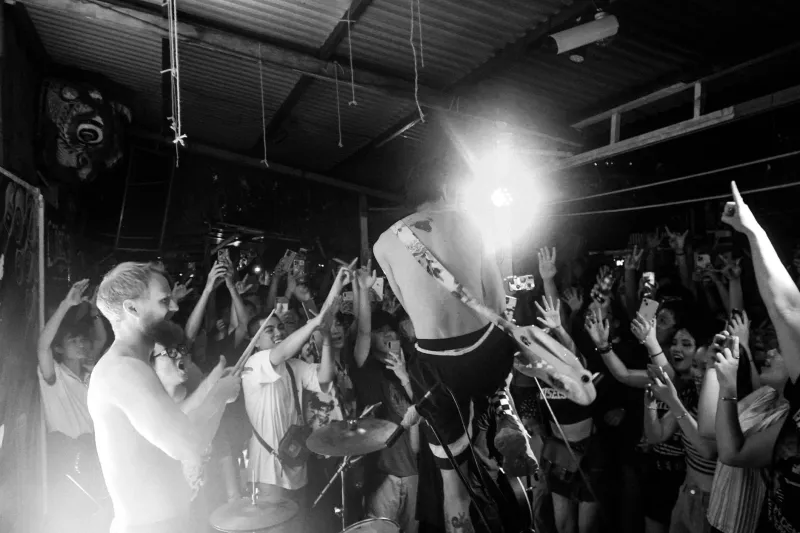
Somewhere in Portland, a jazz guitarist with 4,200 Instagram followers is making more money than most musicians with ten times that number. He has 340 Patreon subscribers paying between $10 and $50 a month. He runs a private Discord where he talks gear, theory, and life with about two hundred people who feel, genuinely, like they know him. He has not released anything on a major streaming platform in two years. He is not trying to go viral. He is, by almost every conventional metric of creator success, invisible.
He is also, by his own account, the most financially stable he's ever been as a musician.
This is the loyalty economy, and it is quietly rewriting the rules of what it means to build a sustainable creative career in America.
The Follower Count Was Always a Distraction
The creator economy, as it was originally sold to us, ran on a simple premise: build a big audience, monetize through ads and brand deals, scale indefinitely. The platforms would handle distribution. You'd handle the content. Everyone wins.
What that model didn't account for was the psychological and financial cost of being perpetually subject to algorithmic whims, or the economics of attention at scale. A creator with a million followers and a 1% engagement rate is, in practical terms, less commercially powerful than a creator with 10,000 deeply invested fans who open every email, buy every release, and evangelize to everyone they know.
This math has been hiding in plain sight for years. But it took a generation of burned-out creators — people who chased follower counts, hit them, and found the promised land disappointingly empty — to make the alternative model feel genuinely appealing.
"I had 85,000 followers on TikTok at one point," says Renee, an electronic music producer based in Atlanta. "I was making content for the algorithm every single day. Exhausted. Anxious. And I was making maybe $400 a month from it. I deleted the app, launched a Patreon, and within six months I had 180 subscribers paying an average of $18 a month. That's over $3,000 a month for work that actually means something to me."
The difference isn't just financial. It's relational.
The Architecture of a Loyalty-First Model
Creators who deliberately build for depth over breadth tend to run some combination of the same core infrastructure. Understanding how these pieces fit together is key to seeing why the model works.
Patreon or a direct membership platform serves as the financial engine. Tiers typically range from a low entry point ($5–$8/month for basic access) through a meaningful middle tier ($15–$25/month for behind-the-scenes content, early releases, and community access) up to a premium tier ($50–$100/month for direct access, one-on-one calls, or exclusive physical goods). The goal is not to have thousands of people on the low tier. It's to have a meaningful number of people on the middle and high tiers.
A private Discord server functions as the community layer. This is where the real magic happens, and it's dramatically underutilized by creators who see it as just another social platform. A well-run Discord isn't a feed. It's a room. People form relationships with each other, not just with the creator. That social graph becomes a retention mechanism that has nothing to do with how good any single piece of content is.
A direct email list is the insurance policy. Platforms disappear. Algorithms change. The email list is the one distribution channel a creator actually owns. The most financially resilient creators in this space treat their list as sacred — low frequency, high value, never spammy.
Direct-to-fan sales — whether that's Bandcamp for music, limited print runs for visual artists, or self-published books and zines — complete the picture. These transactions carry no platform tax and create a direct economic relationship between creator and fan that feels fundamentally different from streaming royalties or ad revenue.
Why Exclusivity Amplifies Everything
There's a counterintuitive truth at the heart of the loyalty economy: making yourself harder to access makes the access more valuable. This isn't elitism. It's basic psychology.
When a fan feels like they're part of an inner circle — when they're getting content, conversation, or experiences that the general public simply cannot access — the relationship shifts. They're not a passive consumer. They're a stakeholder. They want the creator to succeed because their own experience of the community depends on it.
Marcellus, a Chicago-based hip-hop producer who runs a subscription community for beatmakers, caps his Discord at 500 members and maintains a waiting list. "People who had to wait six months to get in treat the community completely differently than if I'd just let anyone join. They show up. They contribute. They protect the culture of the room. The cap isn't about being exclusive for its own sake — it's about maintaining the quality of the thing people are paying for."
His monthly revenue from memberships alone runs over $6,000. He hasn't released a public-facing project in eighteen months.
The Long Game
The loyalty model doesn't produce overnight success stories. It doesn't generate the kind of growth charts that get written up in tech press. What it produces is something rarer and, for most working creators, more valuable: predictable, sustainable income tied directly to the quality of relationships rather than the volatility of platform reach.
The creators winning in this space tend to share a particular philosophical orientation. They've stopped thinking of their audience as a metric and started thinking of it as a community they're responsible for. They're less interested in being famous and more interested in being indispensable to the specific people who've chosen to invest in them.
In an entertainment landscape defined by scale, that's a genuinely radical position. And from where we're sitting at The Late Show Underground Report, it looks a lot like the future.
Small, on purpose, and absolutely printing.