No Name, No Credit, No Problem: The Invisible Collaborators Quietly Reshaping Underground Music
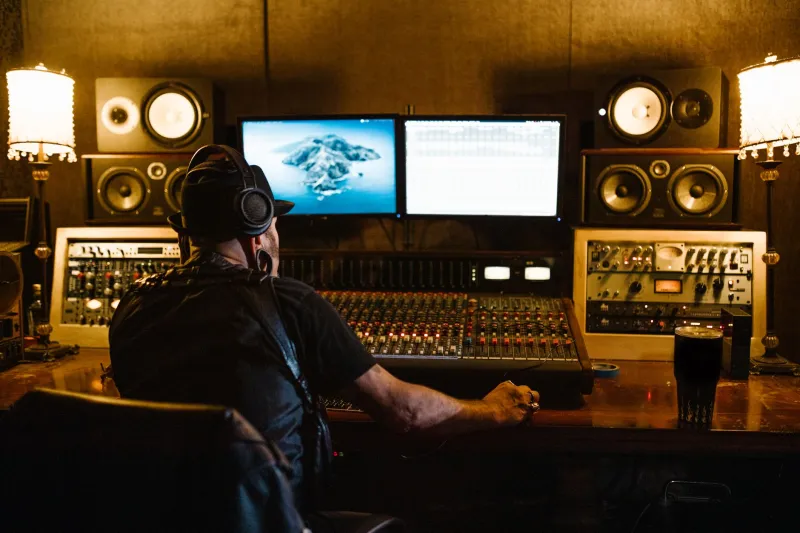
Play the track. You'll hear it — that hi-hat pattern, the way the bass sits just slightly behind the kick, the vocal texture on the bridge that sounds like someone you've heard before but can't quite place. You scroll the credits. Nothing. Just a project name you've never seen and a city listed as "various."
You're not imagining it. That voice is real. That producer has a discography you know. And they chose, deliberately, to not be on this record. At least not officially.
Ghost collaborations — features, production credits, and songwriting contributions that go unattributed by design — aren't new. Session musicians have been doing this for decades. But what's happening in underground music right now feels different in scope, in motivation, and in the way it's actually changing what the music sounds like.
The Clout Economy Has a Bug, and Artists Found It
The conventional logic of the music industry runs something like this: visibility equals leverage equals money. Get your name on as many records as possible. Build the feature resume. Stack the credits. Be everywhere.
A growing number of underground artists are running the opposite play. They're treating anonymity as a resource — something to be spent strategically rather than burned for exposure. And the reasoning makes a certain cold sense when you lay it out.
If you're an artist who's built a following in one corner of the underground, showing up on someone else's record can complicate your identity. It signals allegiance. It invites comparison. It gives your audience permission to have opinions about your taste, your associations, your direction. Staying invisible sidesteps all of that. You get to contribute to something interesting without the tax of being publicly accountable for it.
"There are records I've been on in the last two years that I'm genuinely proud of," said one producer who works primarily in the experimental hip-hop space and asked to remain unidentified. "And I would never put my name on them. Not because they're bad — because putting my name on them would change what they are. The absence of my credit is part of the project."
When the Feature Becomes a Rumor
In tight underground communities, the open secret has its own cultural currency. Word moves fast in small scenes. When a release drops with a vocal that sounds suspiciously like a well-known local artist, the conversation about who it might be becomes part of the listening experience. The mystery generates engagement that a straightforward credit never could.
This is something traditional music PR has no framework for. You can't pitch a story about someone who isn't credited. You can't generate press around a name that isn't there. The speculation exists entirely within the community, which means the community owns it. That's a powerful dynamic for scenes that define themselves by their distance from mainstream machinery.
Some artists are leaning into this deliberately, dropping thinly veiled pseudonyms that function as puzzles for their core audience. Others are going fully dark — no hints, no winks, no acknowledgment even when people guess correctly. Both approaches create a kind of intimacy that public collaboration can't manufacture.
The Production Side: Where Ghost Work Is Most Common
If ghost features carry a certain mystique, ghost production is practically standard operating procedure in some corners of the underground. Producers who've built reputations in one genre frequently contribute to projects in adjacent scenes under different names — partly to experiment without risk, partly to protect the value of their primary brand.
A beatmaker known for a particular sound in one city's rap scene might be making entirely different music for an experimental electronic project across the country, under a name nobody connects to them. The stylistic range they develop doing this work feeds back into their main output in ways that are impossible to trace but easy to hear if you're paying attention.
"The ghost stuff keeps me honest," explained one producer who described this kind of dual-track career. "When nobody knows it's me, I can't lean on my reputation. The music has to work on its own terms. That's a different kind of pressure, and it's good pressure."
What Disappears When the Credit Does
There's a real tension here worth naming. The anonymity that liberates established artists can also obscure labor in ways that aren't always equitable. Session vocalists, co-writers, and contributing producers who are earlier in their careers sometimes go uncredited not by choice but by necessity — because the person higher up the food chain decides the credit structure. Ghost collaboration as aesthetic choice is one thing. Ghost collaboration as exploitation is another.
The underground scenes doing this most thoughtfully seem aware of the distinction. There are informal norms around compensation even when credit is withheld — payment structures that acknowledge the contribution even if the public record doesn't. But those norms aren't universal, and as the trend grows, the potential for the model to be misused grows with it.
The Sound of Nobody in Particular
Strip away all the politics and economics and what you're left with is a body of music that couldn't exist any other way. Some of the most interesting underground releases of the last few years carry that particular energy of people creating without armor — no brand to protect, no audience expectation to manage, no narrative to maintain.
That freedom has a sound. And if you've been listening closely to what's moving through the underground right now, you've already heard it. You just might not know whose name to put on it. That's kind of the point.