Why the 3 AM Creators Are Winning and Hollywood Is Just Now Noticing
Nobody Asked for Permission
Somewhere right now — and I mean literally right now, whatever time you're reading this — someone is streaming to an audience of thousands. They might be playing a video game. They might be doing a comedy set in their living room. They might be breaking down the day's news with the kind of unfiltered commentary that no network executive would ever greenlight. And they are absolutely, positively not thinking about what time slot they occupy.
This is the thing that took the traditional entertainment industry so long to understand: the creators who are genuinely reshaping American culture don't operate on Hollywood's schedule. They operate on their own, and increasingly, that schedule runs well past midnight.
Welcome to 24-hour culture. It's been here for a while. The industry is only now starting to panic about it.
The Streaming Clock Has No Prime Time
Let's talk about what "prime time" actually meant. It was a concept built around a specific set of assumptions: that audiences were home in the evening, that they had one screen, that they watched what was put in front of them, and that their attention could be reliably sold to advertisers in predictable blocks. Those assumptions were always a little shaky. Now they're basically fiction.
Streaming didn't just change where people watch content — it changed when. According to data from multiple streaming platforms, a substantial portion of viewing happens between 10 PM and 2 AM on weekdays. The audience isn't going to bed when the late local news wraps up. They're opening a new tab.
For independent creators, this was always obvious. "My peak viewership is midnight to 3 AM Eastern," says Marcus Webb, a comedy streamer based in Atlanta who has built an audience of over 400,000 followers across platforms without a single television credit. "My audience is night owls, shift workers, people with insomnia, international viewers in different time zones. They found me because the algorithm doesn't care what time it is. I don't either."
Webb's setup is a ring light, a decent microphone, and whatever is genuinely on his mind. His content ranges from sharp political comedy to gaming commentary to what he calls "3 AM philosophy" — rambling, surprisingly thoughtful conversations with his chat about life, culture, and whatever happened to cross his mind that day. It sounds chaotic. It has a more loyal audience than most cable shows.
Comedy Without a Safety Net
The late-night television format has been in crisis for a while, and the reasons are more interesting than most media coverage acknowledges. It's not just that younger audiences don't watch traditional TV. It's that the format itself — the monologue, the desk, the celebrity interview, the band — was designed for a specific cultural moment that has passed.
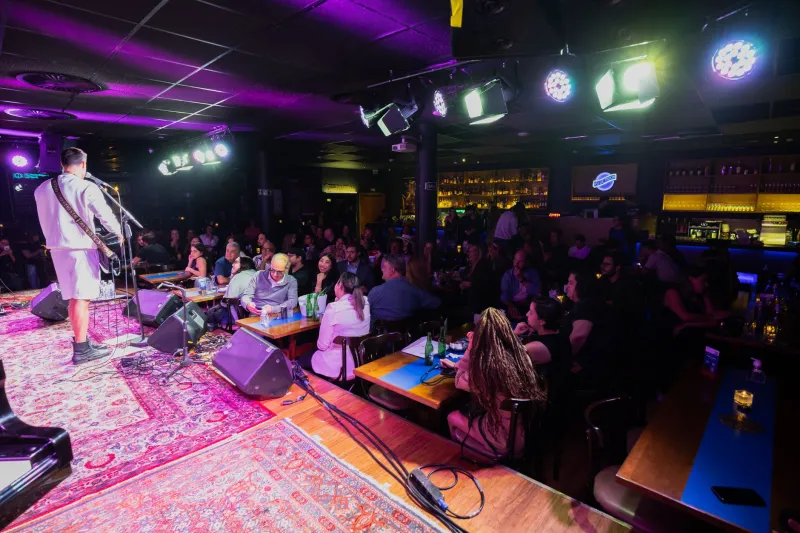
Independent comedians working online have no such constraints. Nadia Okonkwo, a stand-up and digital creator based in Chicago, started streaming her sets and comedy commentary late at night three years ago after growing frustrated with the traditional club circuit's gatekeeping.
"The clubs control everything," she says. "The bookers, the time slots, the audience. Online, I control everything. And yeah, that means I'm up until 2 AM editing sometimes. But I'm building something that's actually mine."
What Okonkwo and creators like her have discovered is that audiences respond differently to late-night content than to daytime content — not because the quality is different, but because the context is. There's an intimacy to watching something at midnight that doesn't exist at 7 PM. The viewer is alone, usually. They're in a lower-stakes headspace. They're more open to something strange, something personal, something that doesn't feel packaged.
This is the emotional register that the best underground content operates in, and it's genuinely hard to replicate in a studio environment with a live audience and a network standards department.
Gaming Culture Set the Template
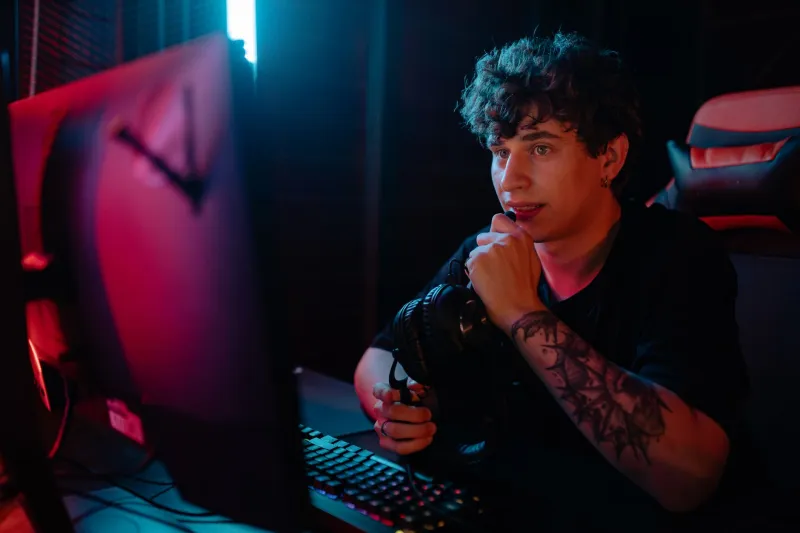
If you want to understand how 24-hour creator culture actually works, you have to look at gaming streams, because gaming figured this out first. The Twitch ecosystem — and now YouTube Gaming, Kick, and a handful of other platforms — built an entire entertainment economy around the idea that people will watch other people play video games at literally any hour of the day or night.
The reason it works isn't the games. It's the parasocial community that forms around a streamer's channel over months and years of consistent content. Regular viewers don't just watch — they participate. They donate, they subscribe, they show up for the 1 AM streams specifically because that's when their favorite creator is most relaxed and most themselves.
"My best content happens after midnight," says Dex Carillo, a gaming and variety streamer from Phoenix with a mid-sized but intensely dedicated following. "I'm tired enough to stop performing and just be a person. My chat knows that. They show up for it."
This authenticity-through-exhaustion phenomenon is real, and it's something the traditional entertainment industry has essentially no framework for understanding. You can't manufacture the feeling of watching someone be genuinely themselves at 1 in the morning. You can only create conditions where it's possible.
The International Dimension
Here's a factor that rarely gets mentioned in these conversations: American creators who work late nights aren't just serving domestic night owls. They're serving daytime audiences in Europe, morning audiences in Asia, and evening audiences across Latin America simultaneously.
The globalization of digital entertainment means that a creator in Columbus, Ohio broadcasting at 11 PM Eastern is hitting peak viewing hours for audiences in London, Lagos, and São Paulo at the same time. This has fundamentally changed what it means to be an "American" entertainment product in ways the traditional industry is still struggling to process.
Networks built their entire business model on domestic market dominance. Independent creators accidentally stumbled into global reach just by staying up late.
What Happens to the Daylight Industry?
Here's my honest take: the traditional entertainment industry isn't dying, but it is being demoted. It will continue to produce prestige content, major events, and the kind of spectacle that requires massive budgets. But it will no longer be the primary site of cultural relevance for a significant portion of the American audience.
That role has migrated to creators who operate on their own schedules, in their own spaces, without asking anyone's permission. They're building genuine communities around authentic personalities, and they're doing it at hours when Hollywood has been asleep for decades.
The Late Show, as a concept, used to mean network television's last word of the evening. Now it's just the beginning of the real conversation. And that conversation runs all night.