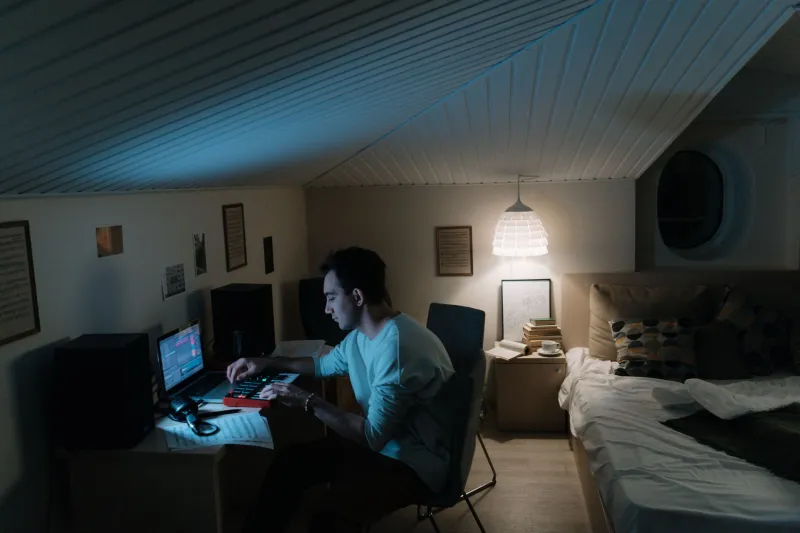
Clocking Out of the Creator Economy and Building Something Better at 2 AM

Let's be honest about what the mainstream creator economy has become. You post, you optimize, you chase the algorithm like it owes you something, and at the end of the month you're splitting pennies with a platform that changed its monetization rules again while you were asleep. For a lot of creators — especially the ones operating in underground music, late-night entertainment, niche subcultures, and off-peak content spaces — the traditional model was never really built for them anyway.
So they stopped waiting for it to work and built their own thing.
What's emerging right now, quietly and with very little mainstream coverage, is a parallel financial ecosystem for night-shift creators. It doesn't run on YouTube ad revenue or Spotify streams. It runs on loyalty, timing, and a surprisingly deep understanding of when their audience is actually awake.
Why the Standard Playbook Stopped Making Sense
The numbers on streaming platforms have been grim for independent artists for years, but the creator economy side of things — YouTube, TikTok, Twitch — was supposed to be different. Direct audience, direct money. Except it isn't really working that way anymore.
Algorithm changes have buried channels that took years to build. Ad rates fluctuate wildly depending on content category, and anything that skews edgy, niche, or countercultural gets demonetized faster than it gets discovered. For underground entertainers — the late-night podcast hosts, the experimental beat makers, the horror hosts, the avant-garde streamers — the mainstream platforms have essentially become hostile territory.
The creators who are actually thriving right now figured this out early and redirected their energy toward models that don't require a platform's blessing to function.
The Patreon Tier Game, Played Differently
Patreon isn't new, but the way underground creators are using it has gotten genuinely sophisticated. The old approach was pretty simple: pay five bucks, get early access. That model still exists, but the creators who are building real income have gone much deeper.
The most successful setups treat Patreon less like a tip jar and more like a membership club with actual stakes. Higher tiers might include access to a private Discord community, monthly voice memos, unfiltered behind-the-scenes audio, or exclusive live sessions that never get posted publicly. The content at the top tier isn't just more content — it's a different relationship with the creator entirely.
One thing that's become clear talking to people in these spaces: the fans who pay for premium tiers aren't just paying for the content. They're paying to be part of something that most people don't know about. Exclusivity, when it's genuine, is worth real money to the right audience.
Midnight Merch Drops and the Psychology of Off-Hours Commerce
This one sounds like a gimmick until you look at the numbers. Several underground creators have started timing their merchandise releases specifically for late-night hours — 1 AM, 2 AM, sometimes later — and the conversion rates are outperforming standard daytime drops by a significant margin.
The logic isn't complicated once you think about who's actually awake and engaged at those hours. Night-culture audiences are already in the headspace. They're not scrolling passively during a lunch break — they're deep in their thing, fully present, and when a creator they're genuinely invested in drops something limited at 2 AM, there's an urgency to it that a noon release just can't replicate.
Limited runs with tight windows, announced with minimal lead time through direct channels like email lists or Discord pings rather than social media, have become a reliable revenue lever for creators who've built the right kind of tight-knit following. The scarcity isn't manufactured for hype — it's a genuine reflection of how these small-batch operations work.
Discord as Infrastructure, Not Just Chat
If you're still thinking of Discord as a place where gamers hang out and argue, you're behind. For a significant slice of the underground creator world, Discord has quietly become the most important financial and community infrastructure they operate on.
Paid Discord communities — accessed through Patreon, through direct subscription, or through one-time access fees — are functioning as the backbone of sustainable creator businesses. Inside these servers, creators host live listening sessions, real-time Q&As, collaborative projects, and the kind of unfiltered conversation that would get flagged or buried anywhere more public.
The value isn't just the content. It's the community itself. When your Discord becomes the place where your audience connects with each other — not just with you — you've built something with genuine staying power. People don't leave communities they're embedded in. They leave content feeds all the time.
Direct Email Is Having a Quiet Comeback
Somewhere between the algorithm anxiety and the platform dependency, a lot of underground creators have landed back on the most unglamorous tool in the kit: the email newsletter.
Substack and similar platforms have gotten attention in the journalism world, but independent entertainers are using the same model to build direct lines to their audiences that no platform can sever. A list of ten thousand engaged subscribers who actually open your emails is worth more, in practical terms, than a hundred thousand followers on a platform that might throttle your reach next month.
The creators doing this well aren't just repurposing content. They're writing emails that feel like personal correspondence — late-night dispatches that match the energy of their work, sent at hours when their audience is most receptive. It's intimate in a way that social media posts rarely are, and intimacy converts.
What the Financial Models Have in Common
Look across all of these approaches — the tiered memberships, the midnight drops, the Discord communities, the direct email lists — and a pattern emerges. None of them depend on a platform deciding you're worth promoting. None of them require you to optimize for an algorithm's preferences. All of them are built on the premise that a smaller, deeply engaged audience is more valuable than a large, passive one.
This isn't a new idea in theory. But in practice, it takes a specific kind of creator to execute it — someone willing to invest in community over reach, to prioritize depth over virality, and to do their best work at hours when most of the content industry is already asleep.
The underground economy isn't a fallback plan. For the people building it right now, it's starting to look like the smarter play all along.
The mainstream creator economy will keep doing what it does. Meanwhile, somewhere around 2 AM, somebody just dropped forty limited-edition shirts and sold out in twenty minutes. Their streaming numbers are terrible. Their rent is paid.